

the "secret sauce" of Taiwanese flavor + eaaasy dinner recipe
you've probably heard of “Satay” but have you met its cousin?

Yes, we eat Hot Pot in the summer too.
That’s how much we love hot pot. I vividly remember many summer days walking down the steamy wavy concrete sidewalks before stepping into hot pot restaurants with friends. The restaurants are usually freezing for our hot pot eating pleasure.
To my paid Substack subscribers—thank you for making this dream possible. ❤️
Hi, I’m Tiffany. If you enjoy weekly stories and want more—deep dives into Taiwanese culture, recipes, Asian ingredients and topics no one else is talking about—I’d love your support as a paid subscriber. It helps me spend more time creating and organizing my thoughts and lessons for you.
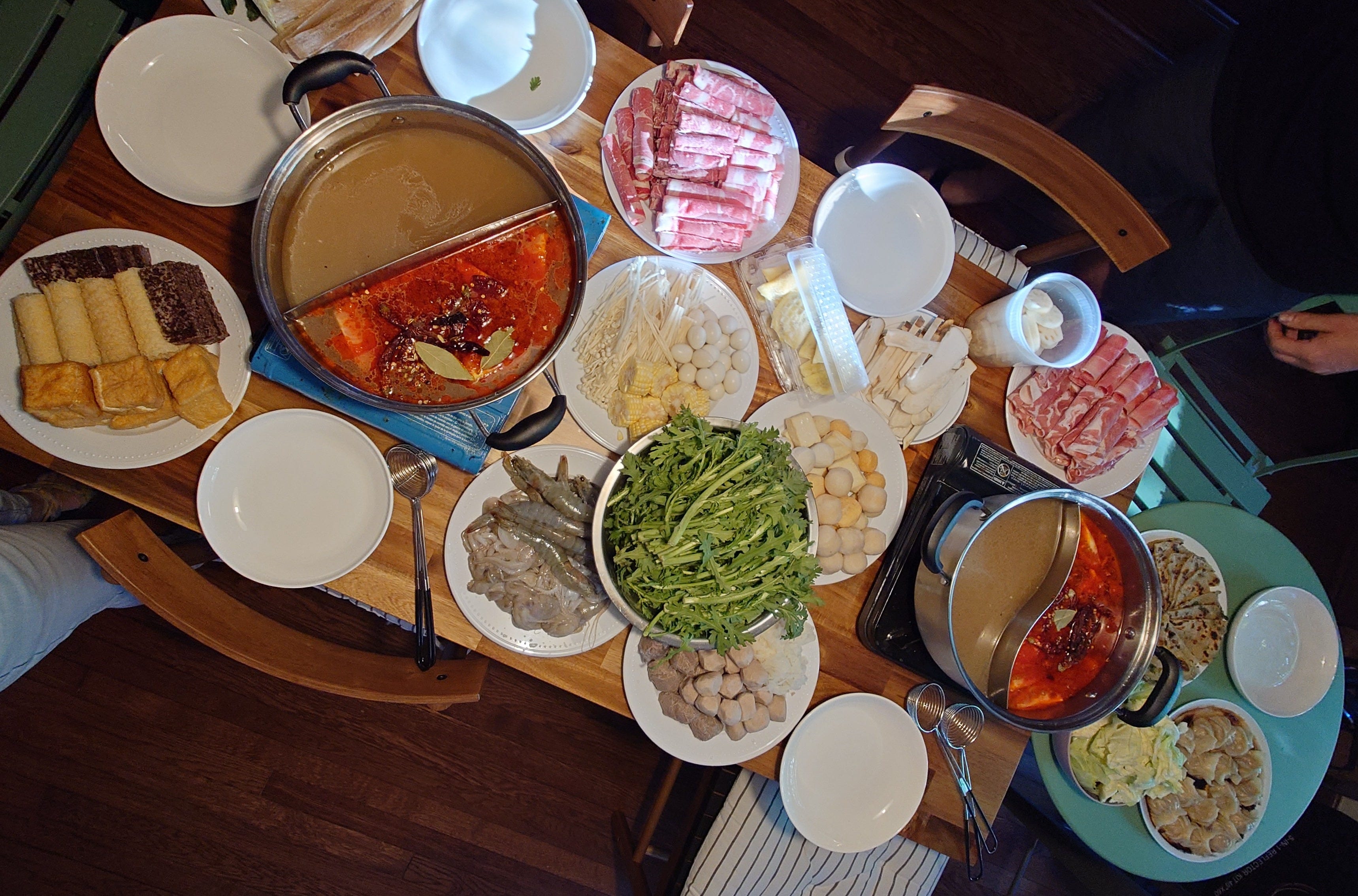
Hot pot is a quint essential Taiwanese experience, a popular dinner activity for friends and family to gather around a boiling hot pot of broth and cook ingredients they want to eat.
The pot and the ingredients are the stars but the SAUCE is the soul. Everyone gets to make their own and has their favorite ways of mixing but at a young age we were taught one classic method that is so deep in flavor, layers and umami rich. Perfect for dipping anything into and turn any bland items into the best thing you’ve ever tasted.
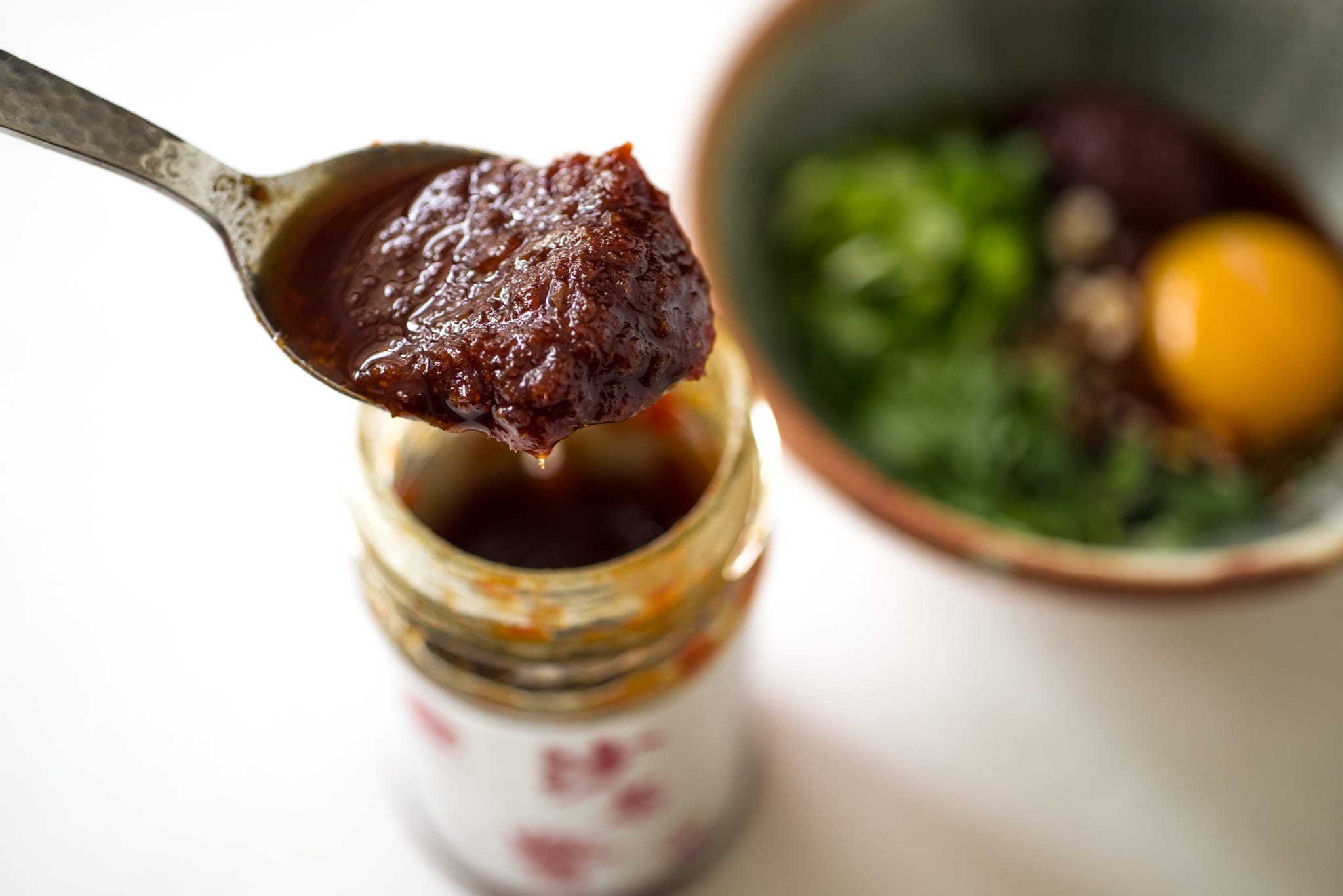
This “secret sauce” in Taiwan starts with a base called “shāchá” (沙茶醬).
It is a rich, savory, a little funky, extremely complex umami, grainy, paste-like sauce that consists 20 - 50 ingredients depending on the recipe. Shāchá usually consists of a variety of spices, dried seafood, garlic, shallots and oil, each ingredient is prepared separately until fragrant then ground up and cooked together to complete the sauce. It can be a labor intensive process but the sauce is so delicious, it can probably be considered as a “mother sauce” of Taiwanese flavor.
Shāchá is added to stir-fry noodles, a scoop on top of thick soups(羹), hot pots, grilling sauces, marinades… Sometimes I forget how much it is actually used in our daily foods. To simplify how the sauce is actually used, in English it’s often simply labeled as “BBQ Sauce” though it tastes NOTHING like the sweet tangy American BBQ sauce.
How did shāchá get to Taiwan?
ShāChá is most likely derived from “Satay” commonly seen in Indonesia and other South East Asian countries, though if you put the two together today they look completely different and tastes quite different as well. Satay is peanut heavy, often sweet and definitely doesn’t have as heavy of a dried seafood presence. Satay is the OG “peanut sauce” and why everyone relates it to Asian cuisine, but not every Asian country/region eats peanut sauce, sometimes we take the peanut out altogether— here’s that story.
When satay was brought to CháoShàn(潮汕) China, the flavor and the sauce evolved through different preference and available ingredients— dried shrimp and fish was added, along with other commonly used Chinese spices such as black cardamom, star anise, cumin, Chinese cassia(a type of cinnamon), dried orange peel and other herbal medicines. However, the CháoShàn version kept the peanut-heavy quality of the original Satay.
After world war two, more CháoShàn immigrants moved to Taiwan with the Republic of China government and brought their version of Satay with them and the sauce went through another revolution. Peanuts were eventually removed completely, the recipe became more fish heavy, grainier instead of its creamy ancestors and more savory umami than sweet. It became so popular it’s everywhere in our daily life and a super easy way to add complex flavors to the dishes.
I love learning about how cult-classics came to be and the relationships between culture, history and food. It’s so fascinating. It’s also fun that with all the languages I know I can see and find the connections more easily and go for a deep dive to see how they’re related.
Do you want me to explain how “shāchá” and “satay” is related in language? It has to do with how tea is pronounced in different Chinese dialects but has nothing to do with tea. I’m not sure how good I am to explain it all and I don’t want to bore you, but let me know if you want me to try.
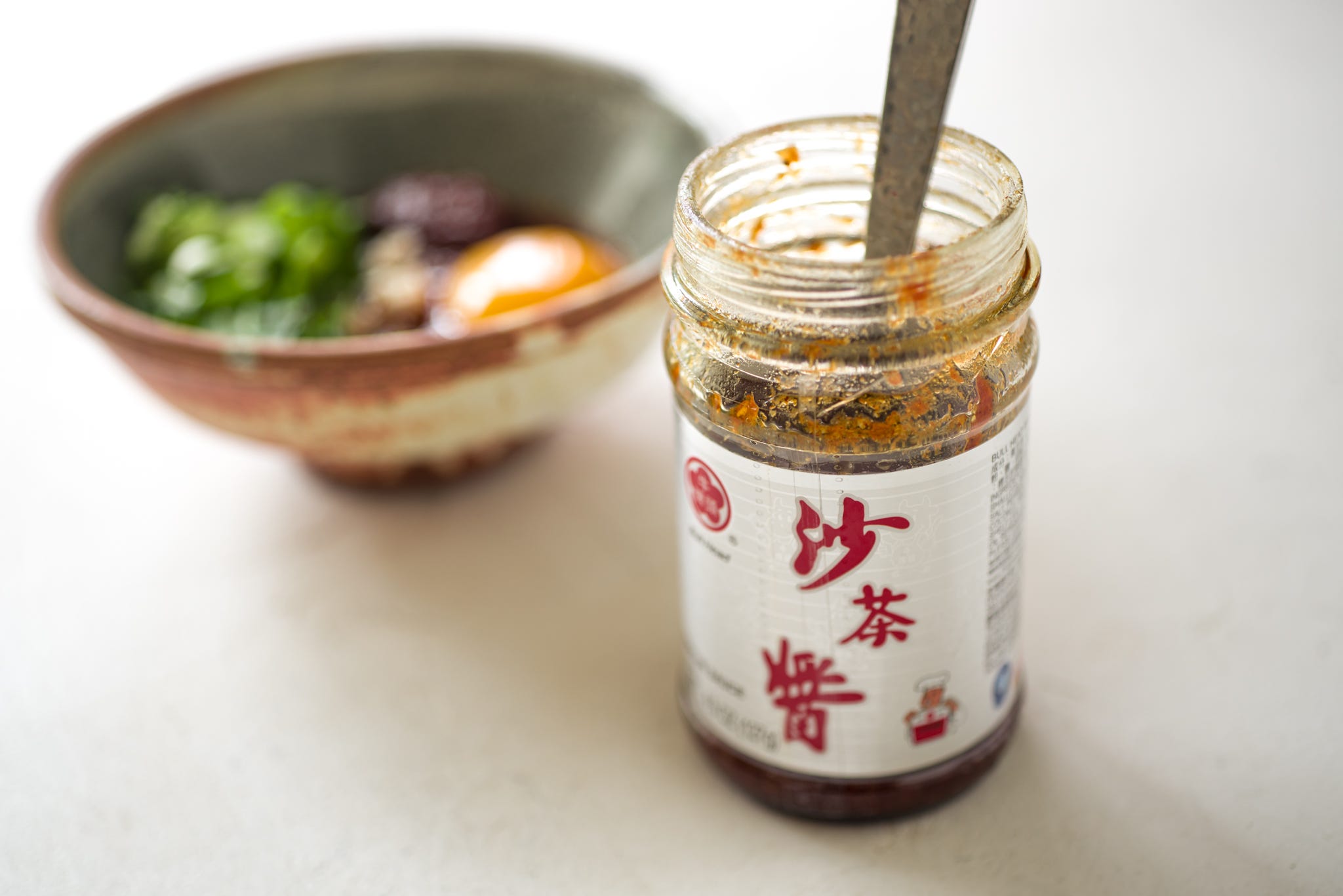
Most families don’t make their own shāchá, we would simply buy it from the supermarket(just like most families don’t make their own ketchup). The brand that I grew up with is the Bull Head brand. “The silver can”, I overheard James call it during our hot pot dinner.
[RECIPE]
Shāchá Dipping Sauce 沙茶沾醬
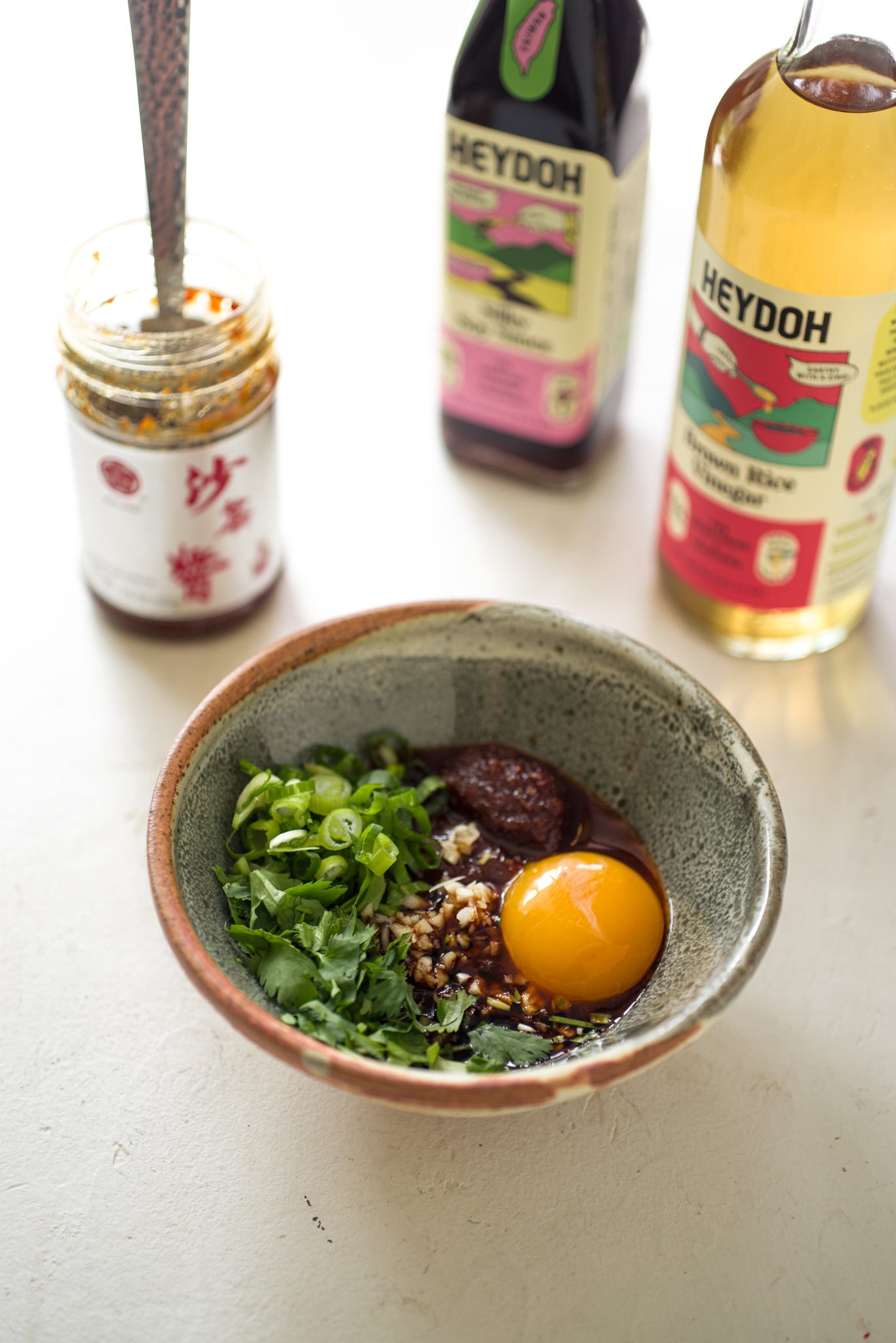
For today’s dipping sauce recipe, you’ll need a jar of Bull Head “BBQ Sauce”, you can usually find it at Asian grocery stores that has more Chinese or Taiwanese ingredients, or order it online. We’re also using HeyDoh! Silky today for extra umami and added sweetness along with HeyDoh!’s newest product- brown rice vinegar to add some zing, freshness and to cut the greasiness. Adjust the amount of soy to vinegar to your taste and the product you have. (ie. if you’re using Kikkoman, you might want to add a touch of sugar and use less of it or it’d be really salty.)
This recipe is more than a dipping sauce.
You can also add noodles, protein and vegetables to it to make it a complete meal without the hot pot, the recipe below will provide a guide on how to make a delicious ShāChá noodle. The main sauce shouldn’t take more than 3 minutes to make and you can have a quick, flavorful meal in 10 minutes. I’m eating it as dinner as I’m typing this. SO GOOD.
If you’re a paid subscriber, you mean so much to me and I appreciate you! If not, with the paid subscription, you’ll get:
✅ Subscriber-only posts and weekly recipes (Free subscribers gets occasional posts with no recipes)
✅ Full recipe archive
✅ First to know about new events and sales (cookbooks and other prints)!
